One fruit, many favourites: plantain in Ghanaian food culture

Walk through any Ghanaian market and you’ll see it: bunches of plantain stacked high, from bright green to deep yellow and nearly black. Plantain isn’t just a food in Ghana. It’s a staple, a comfort, a street-food star and a part of family life. Let’s celebrate the many ways we enjoy it.
A staple that feeds a nation
Plantain is one of Ghana’s most important food crops, grown widely in the forest zones of the Ashanti, Eastern, Bono, Ahafo and Western regions. Farmers often grow it alongside cocoa, where its broad leaves give young cocoa trees shade. For many families, plantain is on the table several times a week.
Green plantain dishes
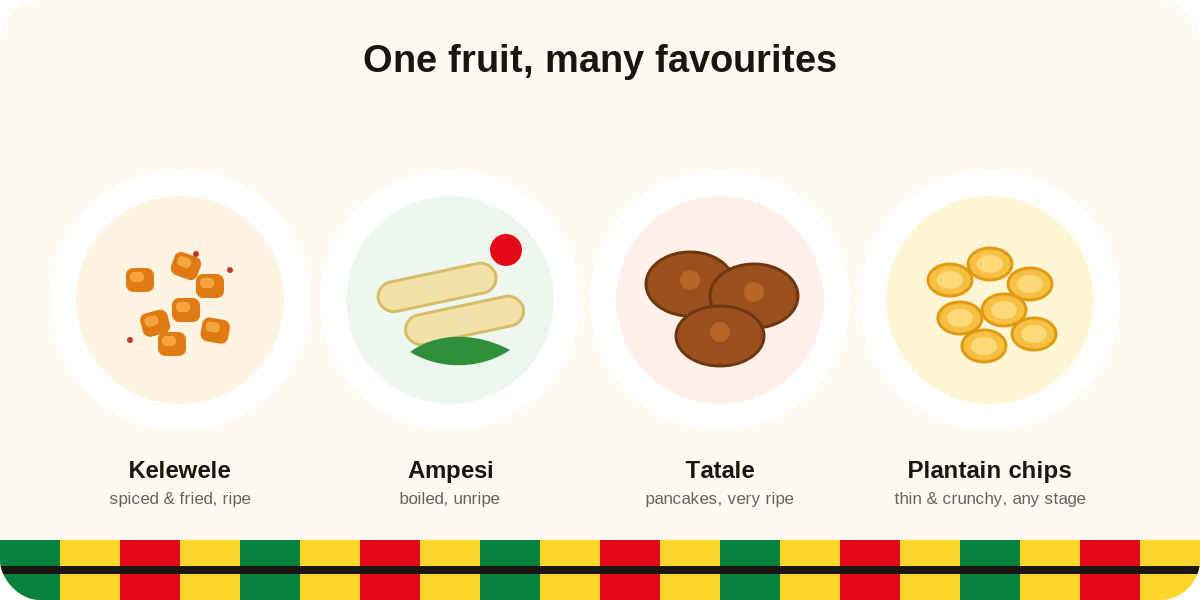
- Ampesi: boiled green plantain, often served with kontomire stew (cocoyam leaves), garden egg stew or a spicy pepper sauce with fish.
- Fufu: boiled plantain pounded together with cassava into a smooth, stretchy dough and served with light soup, palm nut soup or groundnut soup.
- Roasted plantain (borɔdeɛ): grilled over charcoal at the roadside and enjoyed with roasted groundnuts. A classic pairing.
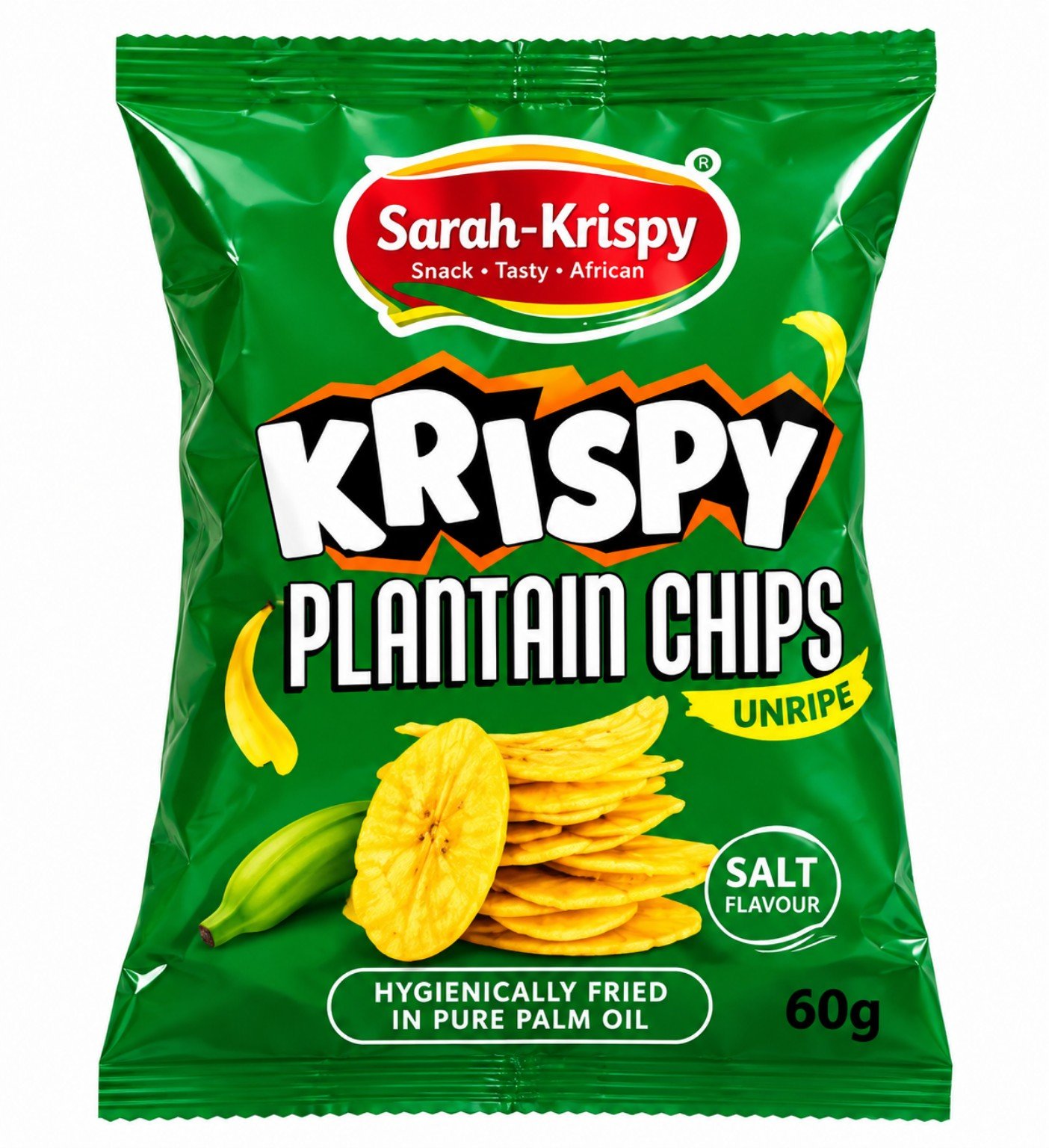
- Unripe plantain chips: thin, savoury and crunchy. A snack you can carry anywhere.
Ripe plantain dishes
- Kelewele: cubes of ripe plantain tossed in ginger, pepper and spices, then fried until caramelised. Evening street food at its best.
- Red red: fried ripe plantain served with black-eyed bean stew cooked in palm oil, a much-loved lunchtime favourite.
- Kaklo: mashed over-ripe plantain mixed with a little flour and spices, rolled into balls and fried.
- Tatale: plantain pancakes made with very ripe, almost black plantain, onion, pepper and a little flour.
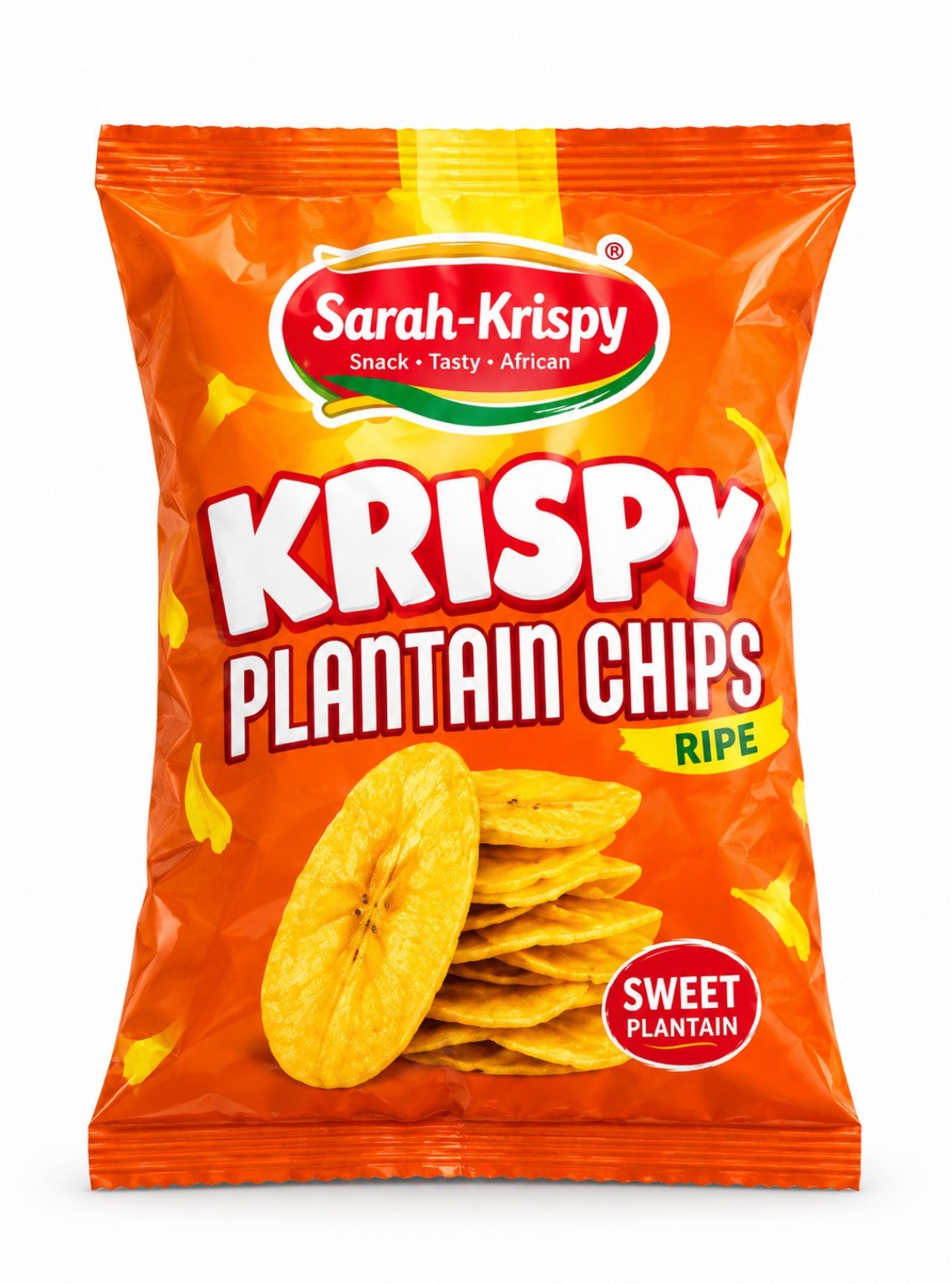
- Ripe plantain chips: naturally sweet and golden, like kelewele’s crunchy cousin.
Nothing goes to waste
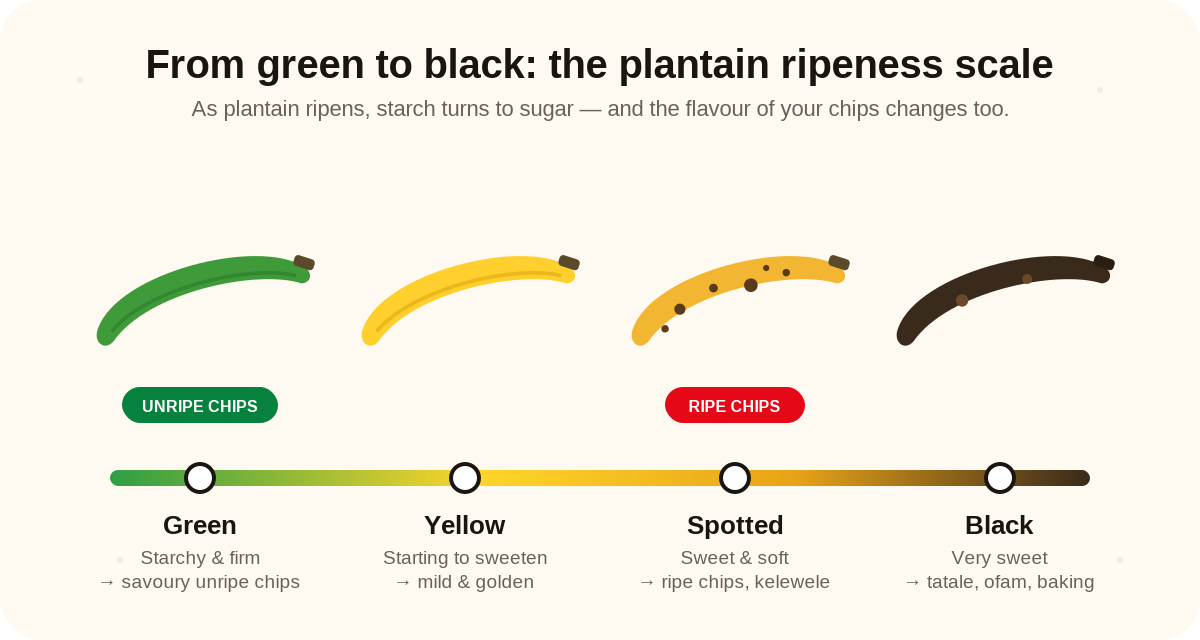
One of the beautiful things about plantain in Ghanaian cooking is that every stage of ripeness has a purpose. Green plantain becomes ampesi or chips; yellow plantain becomes kelewele and red red; even very ripe, black plantain becomes tatale or kaklo. It’s a smart, thrifty tradition that has fed families for generations.
From the market to a modern snack
Plantain chips have long been sold by hawkers in traffic and at lorry stations, often in little clear bags. At Sarah-Krispy, we take that much-loved tradition and package it for modern life: the same plantain flavour, made carefully and sealed fresh so you can enjoy it at home, at school, at work or on the road.
Proudly African. Made for sharing. Made to be enjoyed.
What’s your favourite way to eat plantain? Kelewele after dark, ampesi with kontomire, or a pack of crunchy chips on the go? Tell us on WhatsApp. We’d love to hear from you.