From farm to crunchy chip: how plantain chips are made

Every pack of Sarah-Krispy chips starts its life on a plantain farm. Between the farm and your hands there are a handful of careful steps, and each one makes a difference to how your chips look, taste and crunch. Here’s how it all comes together.
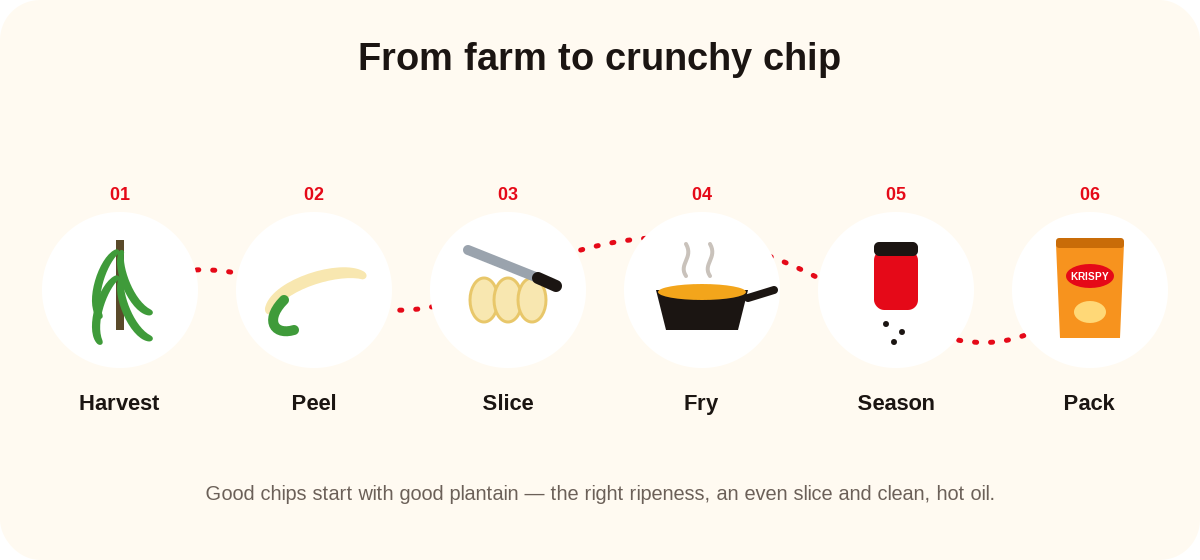
1. Growing and harvesting the plantain
Plantain grows across Ghana, especially in the Ashanti, Eastern, Bono and Western regions. A plantain plant takes many months to grow from a young sucker to a heavy bunch of fruit. Farmers usually harvest the bunch while the fingers are still green and firm, because plantain keeps ripening after it has been cut.
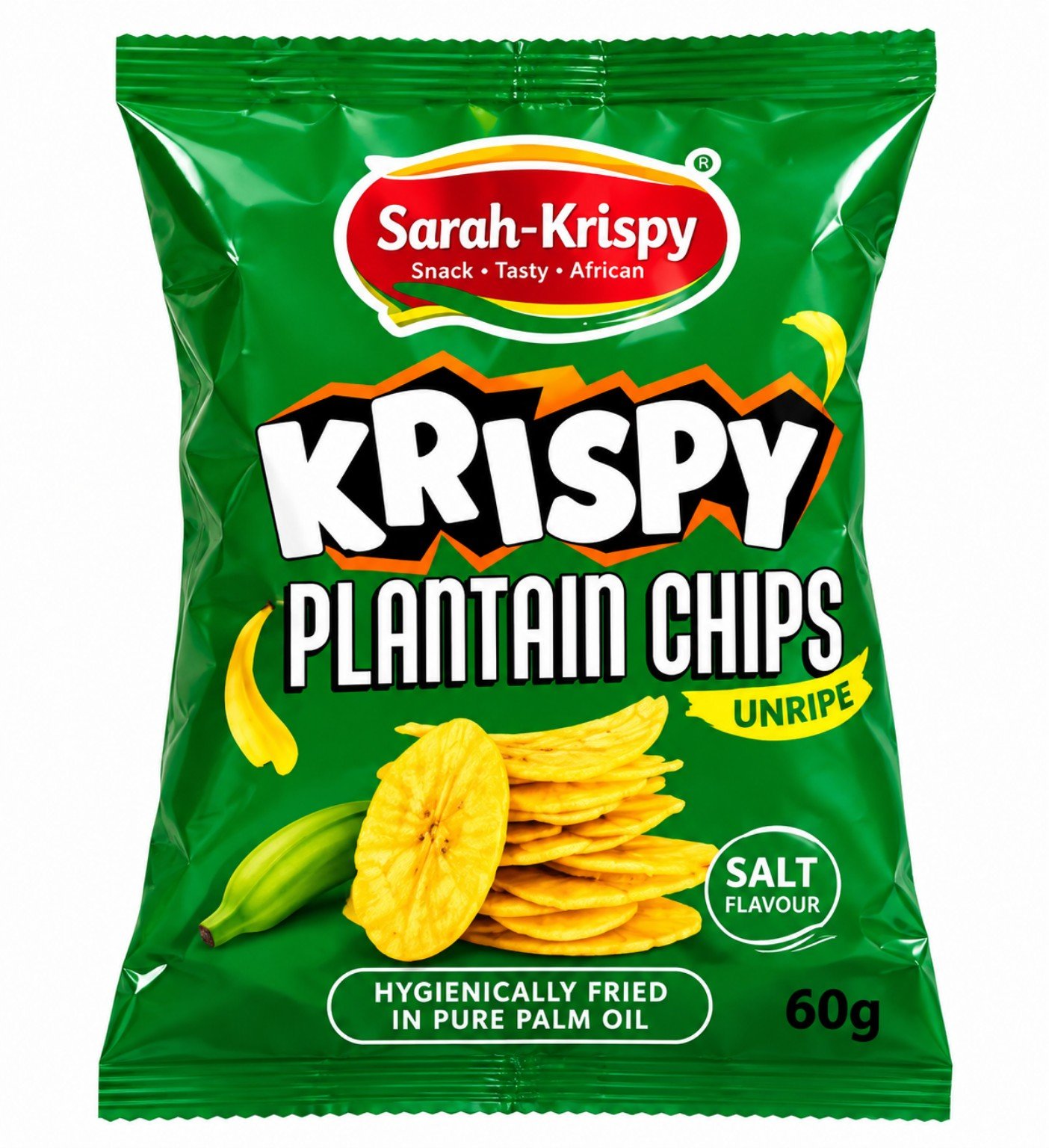
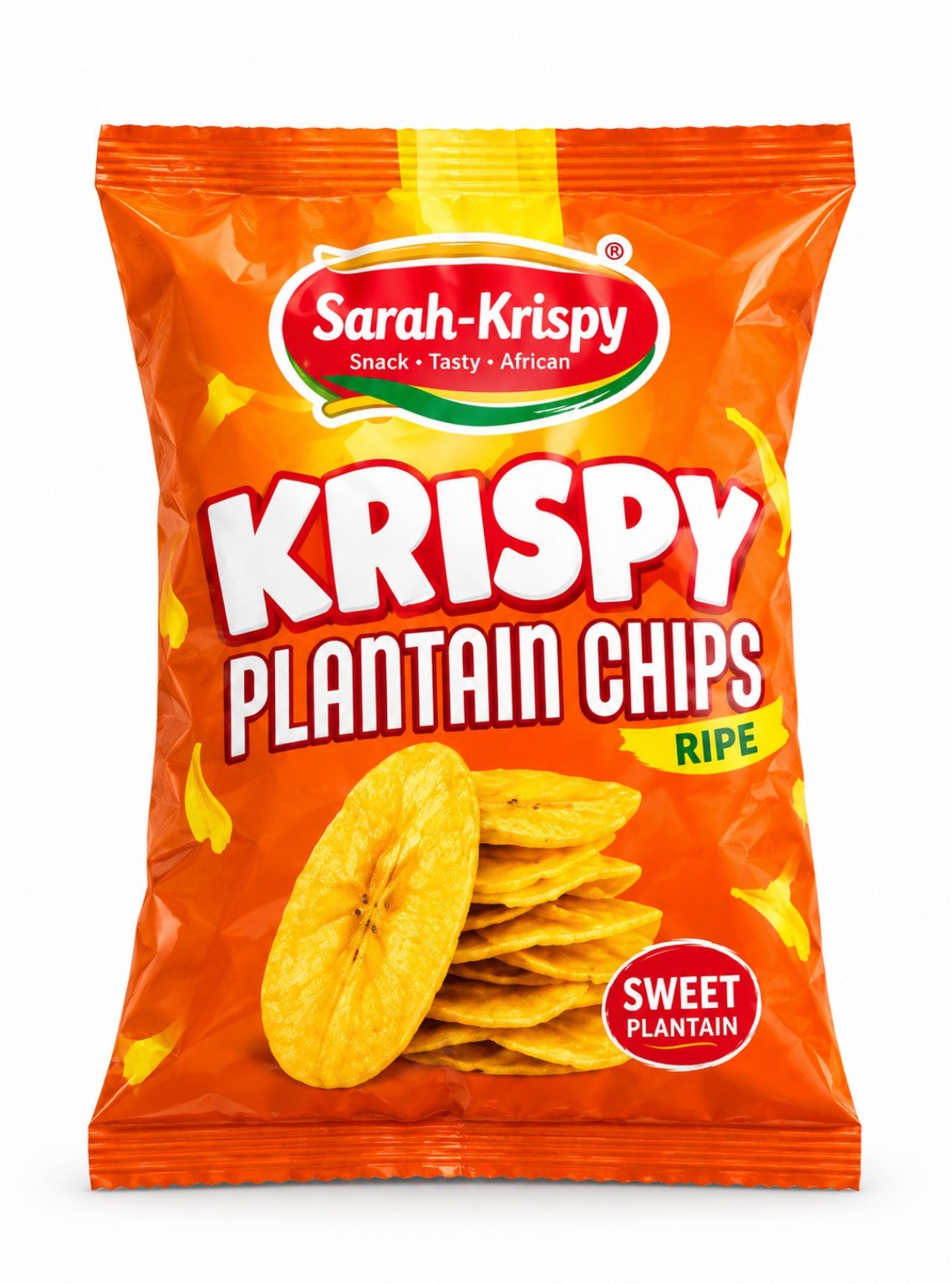
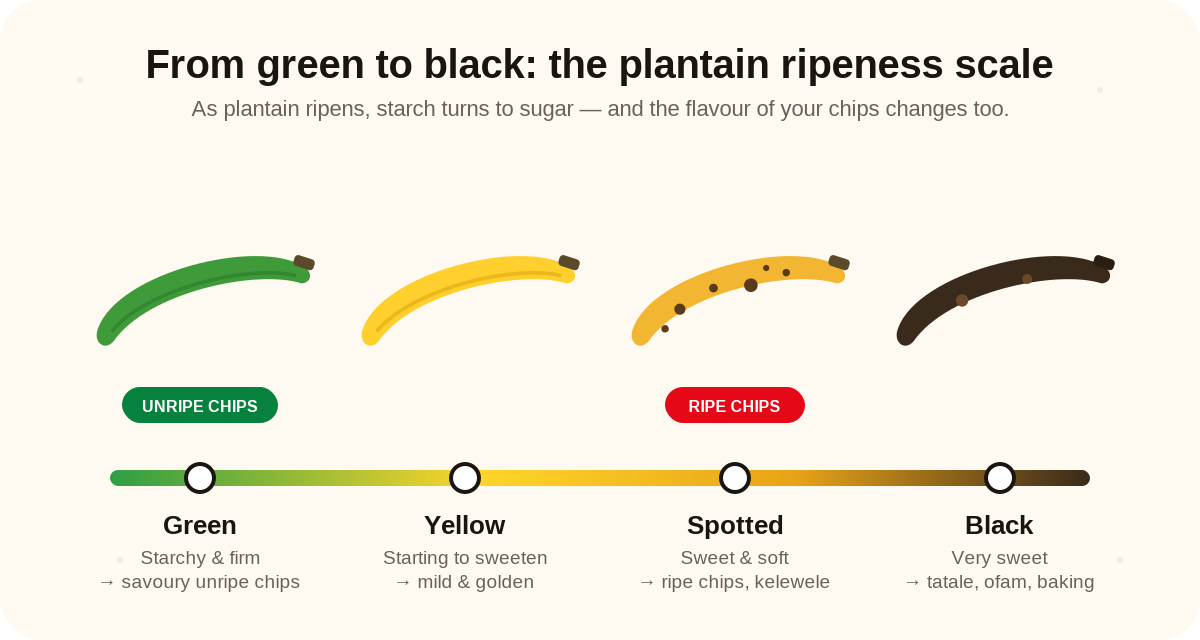
That gives us control. For our unripe chips, we use plantain while it is still green and starchy. For our ripe chips, we let the fruit turn yellow so its natural sugars develop.
2. Choosing the right ripeness
This is one of the most important steps. Too green and ripe chips won’t taste sweet; too ripe and the slices turn soft, soak up oil and lose their crunch. Every batch is checked so that each pack tastes the way you expect.
3. Washing and peeling
The plantain is washed and peeled by hand. Green plantain peel is tough and sticks to the fruit, so peeling takes skill: a shallow cut along the ridges, then the peel is lifted away without bruising the flesh underneath. Clean hands, clean surfaces and clean water matter at every stage.
4. Slicing thin and even
The secret to a great chip is an even slice. If some slices are thick and others thin, the thin ones burn before the thick ones are cooked. Plantain can be sliced in rounds or long diagonal strips, and each slice is kept as uniform as possible so that every chip cooks to the same golden crunch.
5. Frying until golden
The slices go into hot, clean oil. Our chips are hygienically fried in pure palm oil. Oil temperature is everything:
- Too cool, and the chips soak up oil and turn greasy.
- Too hot, and they brown on the outside before they crisp all the way through.
- Just right, and the water in the plantain sizzles away, leaving a light, crisp chip.
When the bubbling slows down, the chips are ready. They’re lifted out and drained so excess oil can drip away.
6. Seasoning
While the chips are still warm, they’re seasoned. Our unripe chips get a light touch of salt to bring out their savoury flavour. Our ripe chips are naturally sweet from the fruit, so they need very little help.
7. Cooling and packing
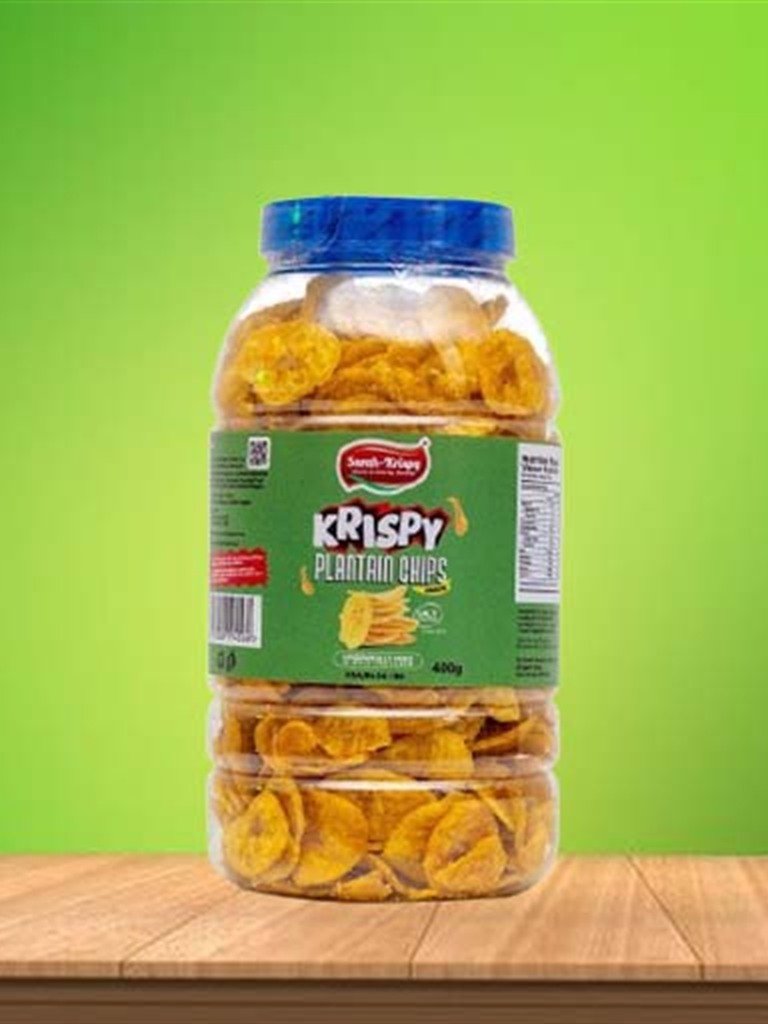
Chips must cool completely before packing. Warm chips create steam inside the bag, and steam is the enemy of crunch. Once cool, they’re packed into sealed bags and jars that keep out air and moisture, so they reach you as crisp as the moment they were made.
Why this matters to you
Every step affects what you taste: the right ripeness for flavour, an even slice for crunch, clean hot oil for a light chip, and good packaging for freshness. When you open a pack of Sarah-Krispy, you’re tasting all of that care.
Close jars tightly after every use, keep packs away from heat and direct sunlight, and never store chips in the fridge, where moisture can make them soft.