Are plantain chips healthy? An honest guide to your favourite crunch
Plantain chips are one of West Africa’s best-loved snacks. They’re crunchy, satisfying and made from a fruit that grows right here in Ghana. But are they actually good for you? The honest answer is: they can be part of a healthy diet, as long as you enjoy them the right way. In this guide we look at what plantain brings to the table, what changes when it’s fried, and simple habits that help you snack smarter.
Plantain itself is a nutritious, naturally gluten-free fruit with potassium, fibre and vitamins. Frying turns it into an energy-dense treat, so plantain chips are best enjoyed in sensible portions, alongside water, fruit and a source of protein.
Start with the fruit: what’s inside a plantain?
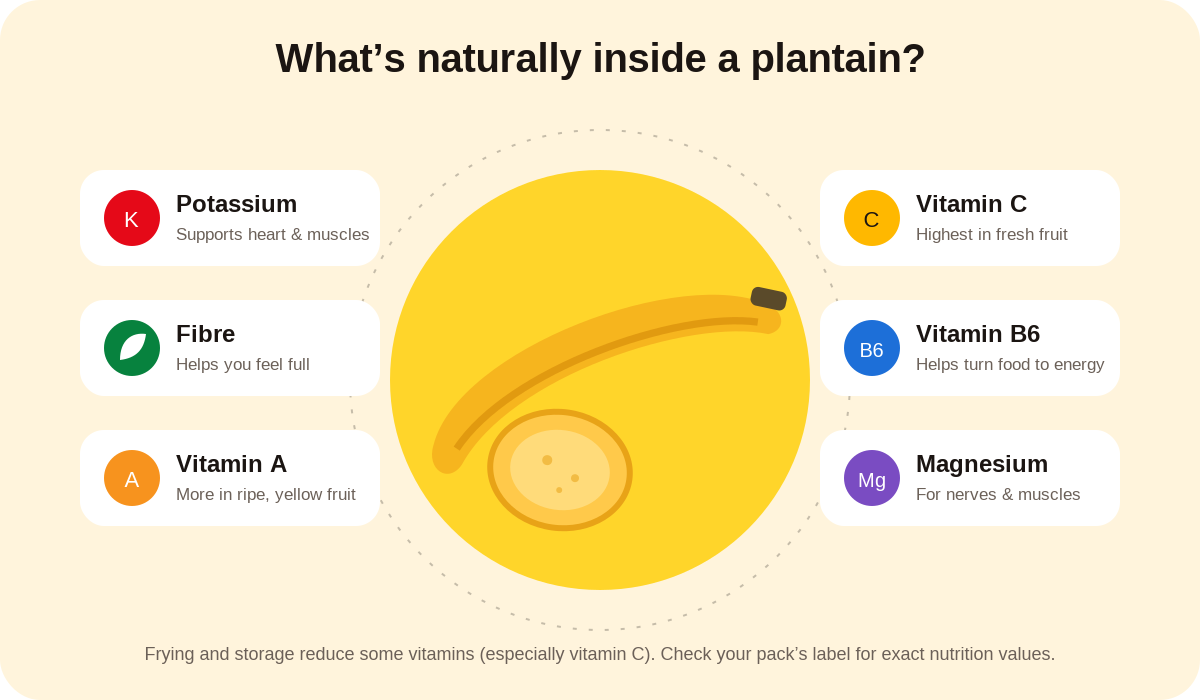
Plantain looks like a big banana, but it behaves more like a vegetable in the kitchen. It is starchier and less sweet than a banana, especially when green, which is why we cook it rather than eat it raw. Fresh plantain naturally contains:
- Potassium, a mineral that helps your heart, nerves and muscles work properly and helps balance the effects of salt in your diet.
- Dietary fibre, which supports healthy digestion and helps you feel full for longer.
- Vitamin A (from beta-carotene), which gives ripe plantain its golden-orange flesh and supports healthy eyes and skin.
- Vitamin C, which supports your immune system. Fresh fruit has the most; heat reduces it.
- Vitamin B6 and magnesium, which help your body turn food into energy and keep muscles and nerves happy.
Green or yellow: does ripeness matter for health?
Yes, a little. As plantain ripens, its starch gradually turns into natural sugar.
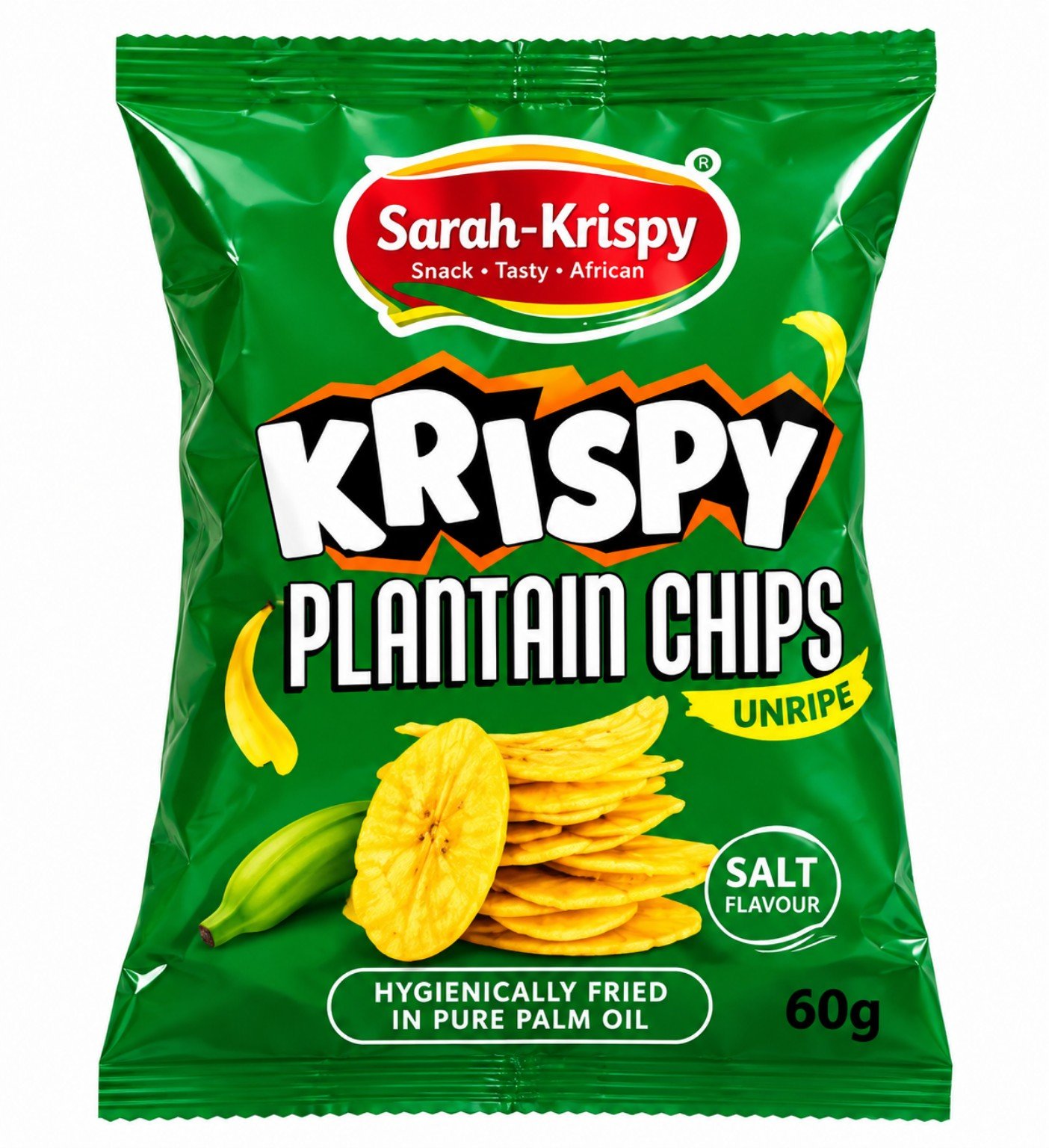
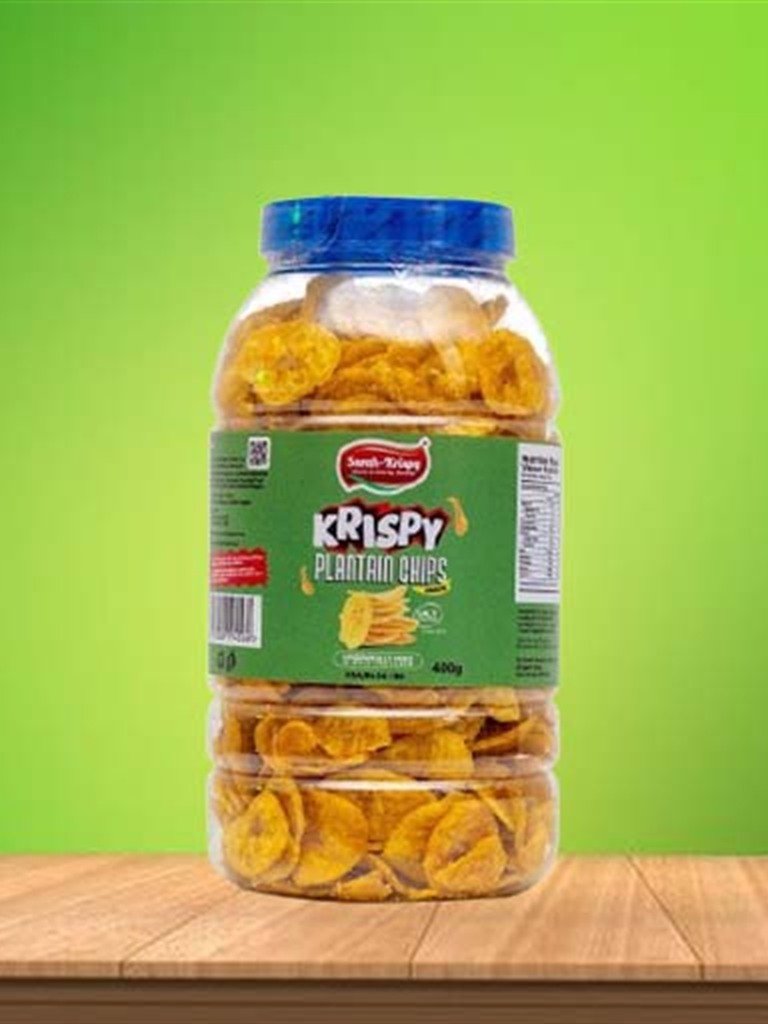
- Green (unripe) plantain is high in starch, including some resistant starch, a type of starch that behaves a bit like fibre in your gut. It tastes savoury and makes firm, crunchy chips like our Krispy Plantain Chips – Unripe.
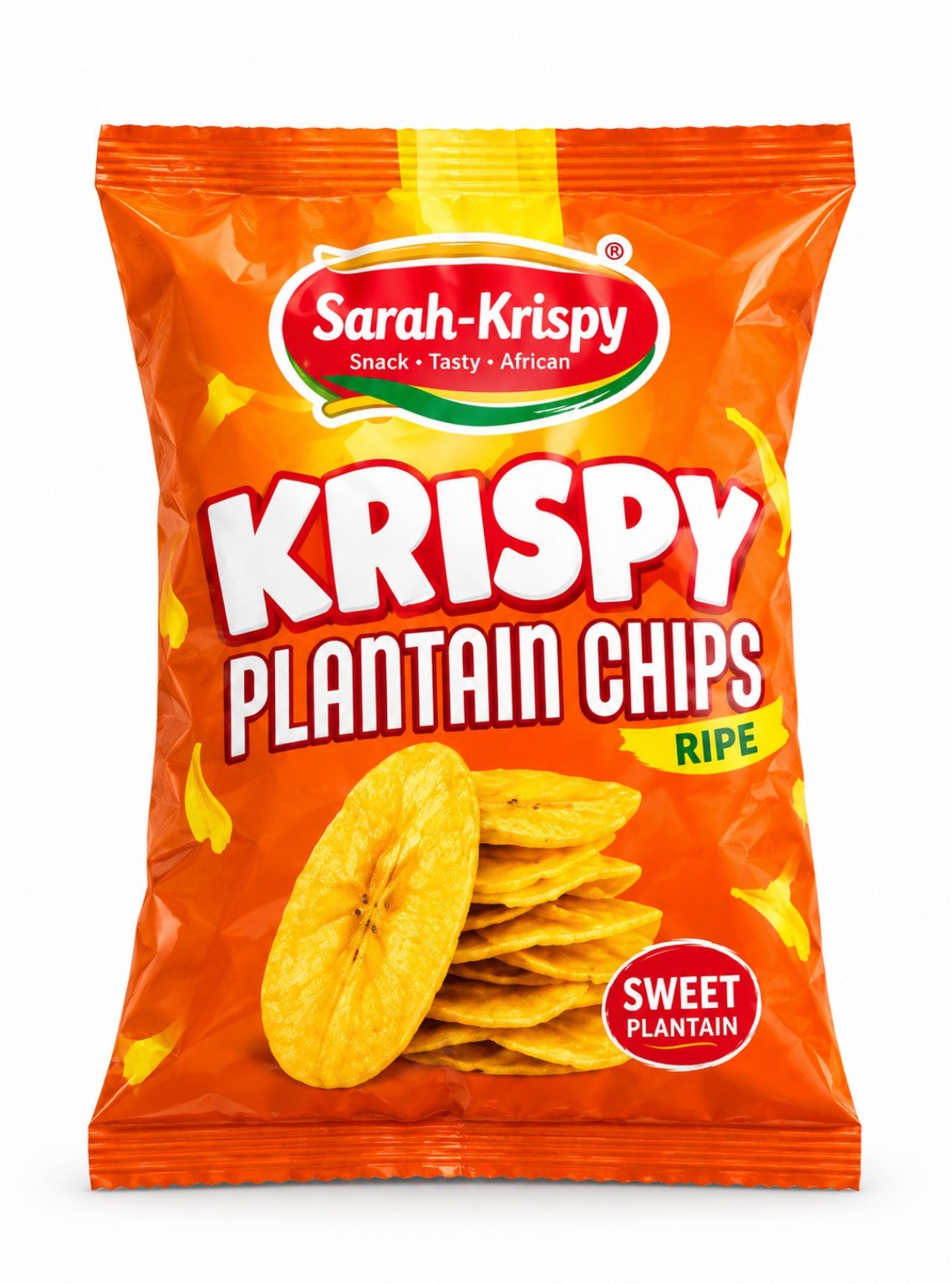
- Yellow (ripe) plantain has more natural sugar and more beta-carotene, which is why it tastes sweeter and looks more golden. It makes our sweet Krispy Plantain Chips – Ripe.
Neither one is “good” or “bad”. They simply offer a slightly different balance of starch and sugar, so pick the one you enjoy most.
What changes when plantain becomes a chip?
To make chips, plantain is peeled, sliced thinly and fried until crisp. Frying is what gives chips their irresistible crunch, but it also changes the nutrition:
- Water is removed and oil is added. That makes chips much more energy-dense than fresh plantain. A small handful of chips can contain as much energy as a much bigger portion of boiled plantain.
- Some vitamins are reduced, especially vitamin C, which is sensitive to heat. Minerals like potassium mostly stay.
- Salt may be added to savoury chips for flavour. A little salt is fine for most people, but it adds up across the day.
Our chips are hygienically fried in pure palm oil. Palm oil is a traditional West African cooking oil. Like most cooking oils it is rich in energy, and it contains a good share of saturated fat, which is another reason to keep portions sensible.
How do plantain chips compare with other snacks?
Compared with many sweets, biscuits and sugary drinks, plantain chips have some real advantages: they’re made from a whole fruit, they contain fibre and minerals, and the ingredient list is short and familiar. Plantain is also naturally free from gluten, which matters for people who avoid wheat. (If you have coeliac disease, always check the pack for allergy and handling information.)
On the other hand, they are still a fried snack. That puts them in the same “enjoy, but don’t overdo it” family as other crisps and fried treats.
| Snack | What it gives you | Keep an eye on |
|---|---|---|
| Plantain chips | Crunch, potassium, some fibre | Portion size, salt |
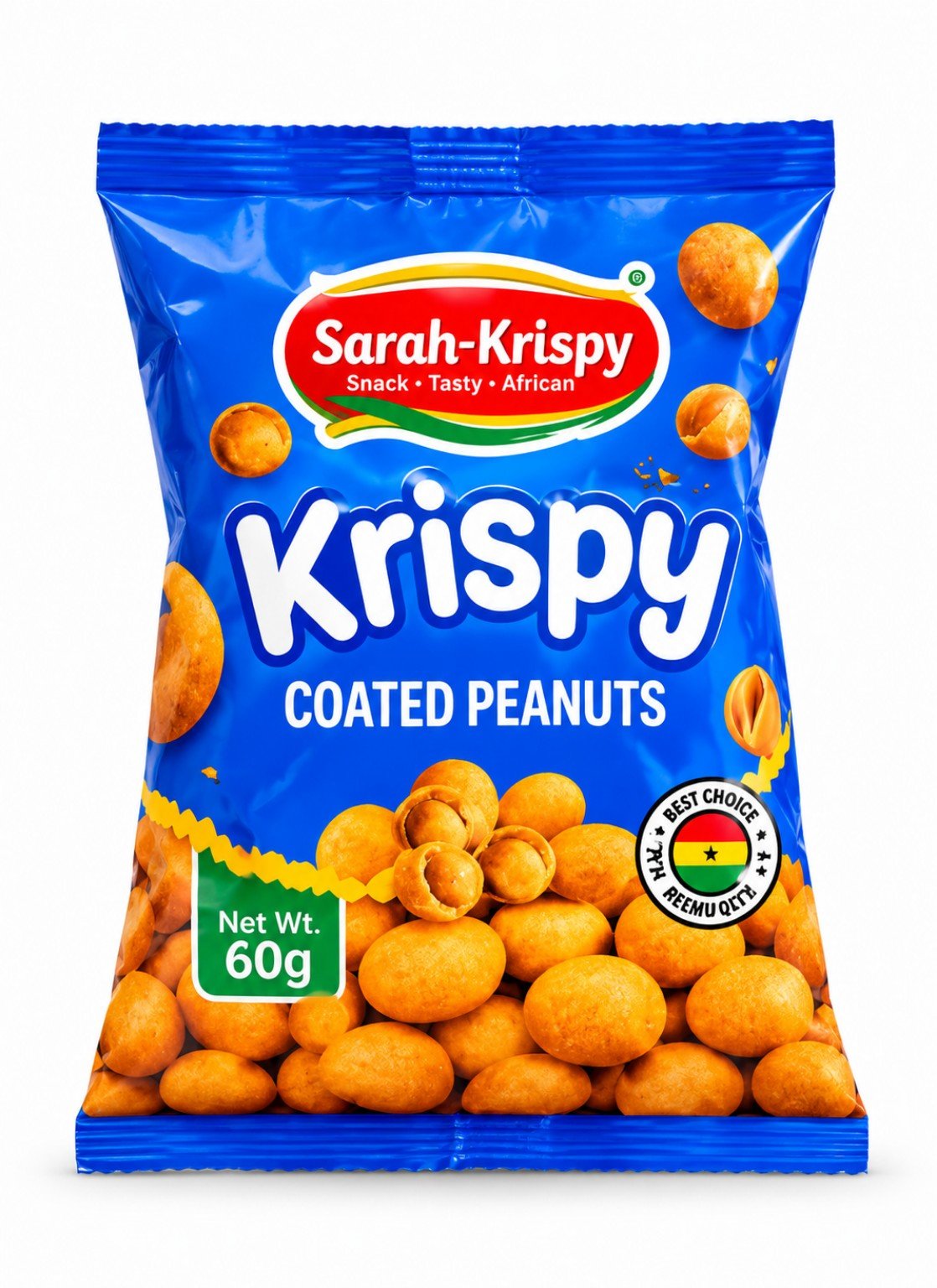
| Coated peanuts | Plant protein, healthy fats | Portion size, peanut allergy |
| Biscuits & sweets | Quick energy | Added sugar |
| Fresh fruit | Vitamins, fibre, water | Nothing — enjoy! |
Smart ways to enjoy plantain chips
Healthy eating isn’t about cutting out foods you love. It’s about balance. These simple habits let you enjoy every crunch:
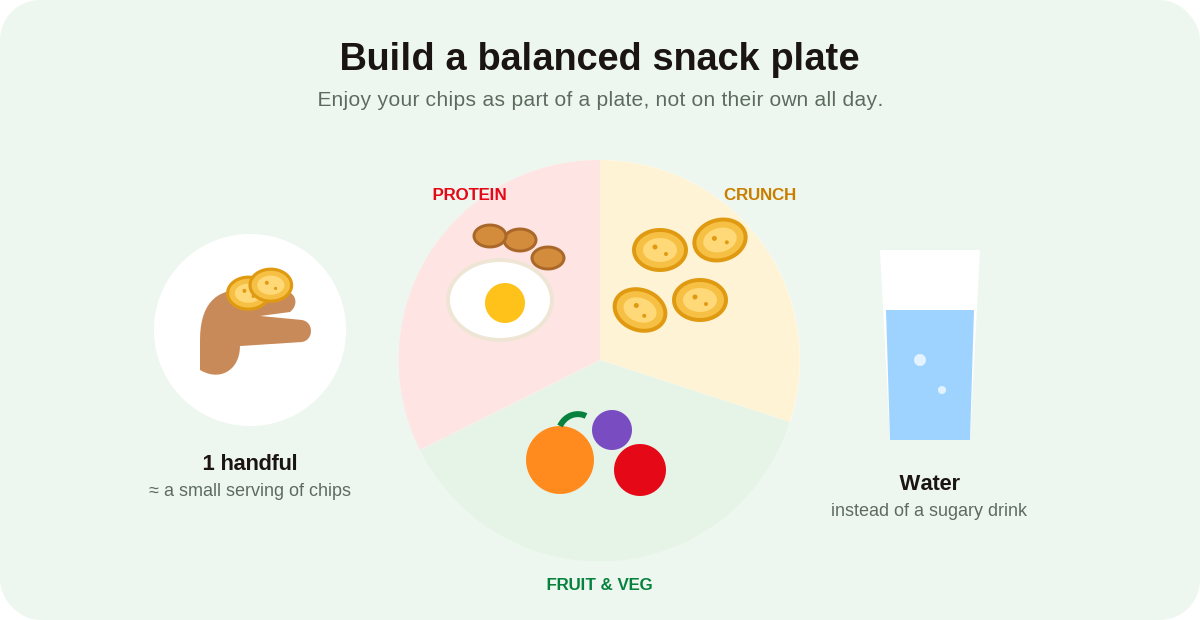
- Pour, don’t graze. Tip a handful into a bowl rather than eating straight from a big jar. You’ll enjoy it more and know when you’ve finished.
- Make it a plate. Pair your chips with a protein (an egg, groundnuts, beans or grilled fish) and some fruit or vegetables for a more filling snack.
- Drink water. Choose water instead of a sugary drink, especially with salted chips.
- Share the pack. Our snacks are made for sharing. Splitting a pack with a friend is portion control that feels like a treat.
- Move your body. A walk, a game of football or dancing at a party all help balance the energy you eat.
Who should take extra care?
- People watching their blood pressure may prefer our sweet ripe chips, or keep salted chips to small portions.
- People managing diabetes should count chips as part of their carbohydrate for the day and follow their doctor’s or dietitian’s advice.
- Young children should always eat snacks sitting down and supervised, as crunchy foods can be a choking risk.
- Anyone with food allergies should read the pack carefully. Our coated peanuts contain peanuts.
Enjoy the crunch, share the pack and balance your plate. That’s the Sarah-Krispy way to snack happy.
The bottom line
Plantain chips aren’t a health food, and they don’t need to be. They’re a delicious, homegrown snack made from a genuinely nutritious fruit. Enjoyed in sensible portions as part of a varied diet with plenty of water, fruit, vegetables and protein, they can absolutely have a place in a healthy, happy lifestyle.
This article is general information, not medical advice. If you have a health condition or special dietary needs, please speak to a doctor, nurse or registered dietitian.